Setting up a supply cycle so the room never runs out

Every treatment room runs out of something eventually, and it is almost never because the supplier failed. It is because consumption is steady and ordering is triggered by noticing, and noticing happens late. A par level and a fixed counting day fix it permanently.
Work out your weekly consumption
Count treatments per week and multiply by what each one consumes: one table sheet, one face cradle cover, a wrap if you use them. That number is the basis of everything else and most rooms have never worked it out.
Do it for one ordinary week rather than estimating. Estimates in this category are consistently low because nobody counts the sheet used for a treatment that was cut short.
Set a par level, not a reorder point
A par level is the amount you want on the shelf at the start of every cycle. Two to three weeks of consumption is comfortable for most rooms: enough to absorb a busy fortnight, not so much that a case sits for months.
The difference from a reorder point is that you top up to the par level on a schedule rather than ordering when something looks low, which is what removes the noticing step.
Pick one counting day and keep it
The same day every week or fortnight, whichever suits your volume. Five minutes counting, then one order. A fixed day is what makes this a habit rather than a task competing with everything else.
Counting at the same point in the week also makes the numbers comparable, so you notice a change in consumption rather than discovering it.
Build lead time into the par level
Handling here takes one to two business days and standard delivery three to seven after that, so a case ordered on a Monday can reasonably be expected the following week. Your par level has to cover that window plus a margin.
For a room that cannot pause, add a week of margin on top. The cost of holding one extra case is far lower than the cost of cancelling a day of appointments.
Order the whole list, not the item you noticed
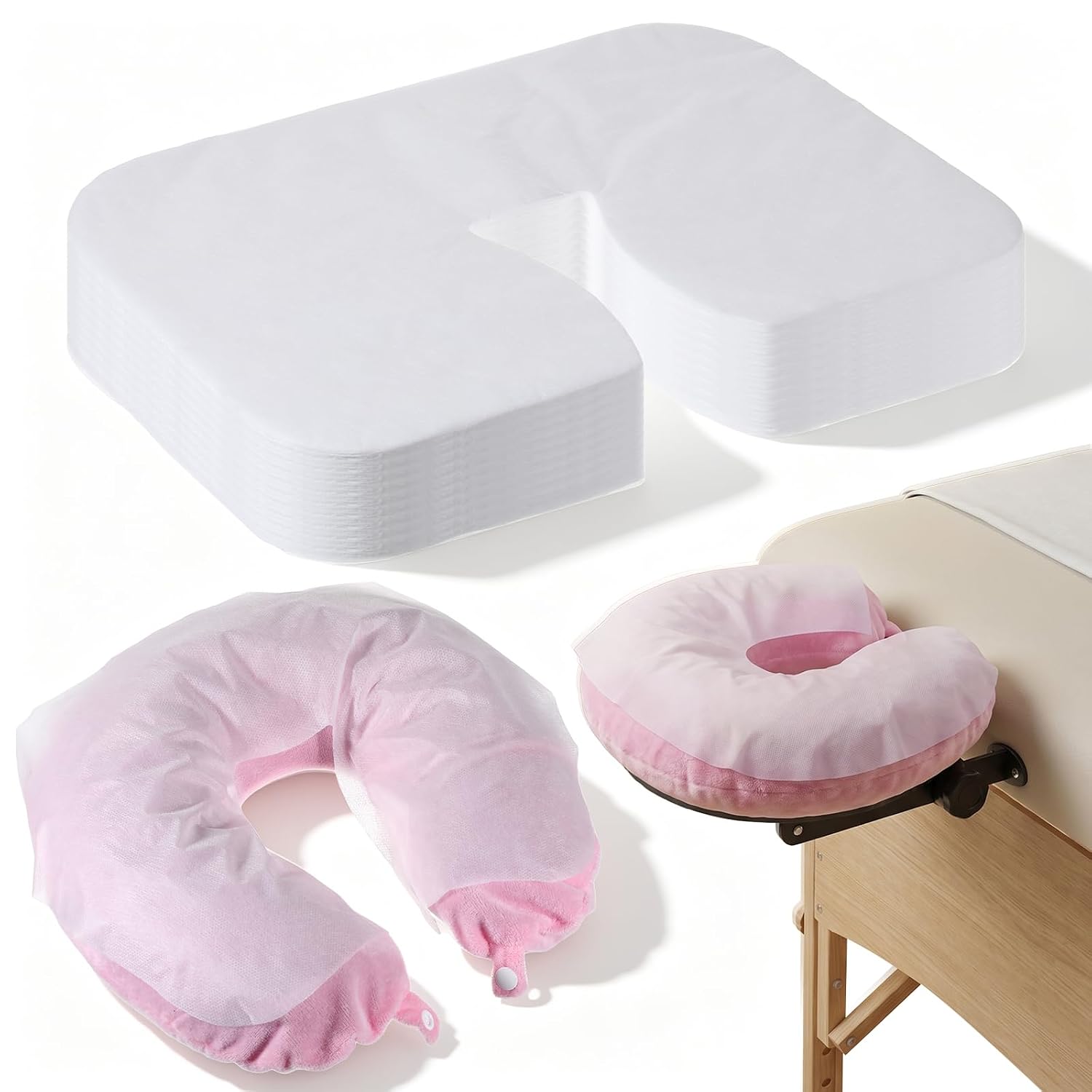
Face cradle covers, wraps and gloves run out on their own schedules and are always the thing that gets forgotten because the table sheets were what prompted the order.
A written list of every consumable, ordered in full each cycle, costs nothing extra and eliminates the partial-order problem entirely.
Consolidate to reach the shipping threshold
Free US shipping applies from a stated order value, and consumables are the easiest category in which to reach it deliberately. Two smaller orders a month will usually cost more in shipping than one larger one.
This is a real argument for a fortnightly rather than weekly cycle in a smaller room, provided the par level covers the longer gap.
Store so that stock rotates
New cases behind old ones, and open only one case of anything at a time. Non-woven fabric does not spoil quickly but it does crease and pick up damp, and a case that sits at the back for a year arrives at the table looking it.
Keep everything off the floor and out of a room that gets steamy. Storage conditions are the main thing that shortens the life of an unopened case.
Track what actually changes
Consumption rises with bookings and with the kind of work you are doing. A month of deep tissue uses more of the heavier sheets; a run of facials uses more cradle covers and fewer wraps.
Reviewing the par level quarterly rather than never is enough. The point is to catch a drift, not to run a forecasting exercise.
Keep a small emergency reserve separately
A sealed case kept apart from working stock, not counted in the par level and opened only when something has gone wrong. It converts a supply failure from a cancelled day into an inconvenience.
The rule that makes it work is that it is replaced immediately when broken into. A reserve that gets absorbed into normal use is not a reserve.
Write the system down
Par levels, counting day, the full consumable list and the supplier details, on one page where anyone covering the room can find it. Systems that live in one persons head fail on the week that person is away.
It also makes the whole thing transferable if you add a second room or a second therapist, which is when informal systems break down first.
Core consumables
- Tudomro 2 Rolls Disposable Massage Table Sheets, Purple, 50-Count Each — $46.54
- Breling 100-Pack Purple Disposable Massage Table Sheets, 31.5" x 71" — $39.99
- Ypfyed 200-Piece Disposable Massage Table Sheets 31" x 71" – White Non-Woven Fabric Bed Covers — $39.99
- MASERTIO Disposable Massage Bed Covers – 60 Sheets, Non-Woven Material, 31.5" x 71" — $36.99
The cycle
Count one ordinary week, set a par level of two to three weeks plus lead time, pick a fixed counting day, order the entire list each cycle, and keep one sealed case aside as a reserve you always replace.
Questions about anything above? Our FAQ covers the usual ones, the Shipping Policy has the delivery detail, and you can contact us directly — we answer within one business day.